Hermes: API Client Foundation
Building the robust foundation for a web-based API client focusing on OAuth, persistence, and workspace management.
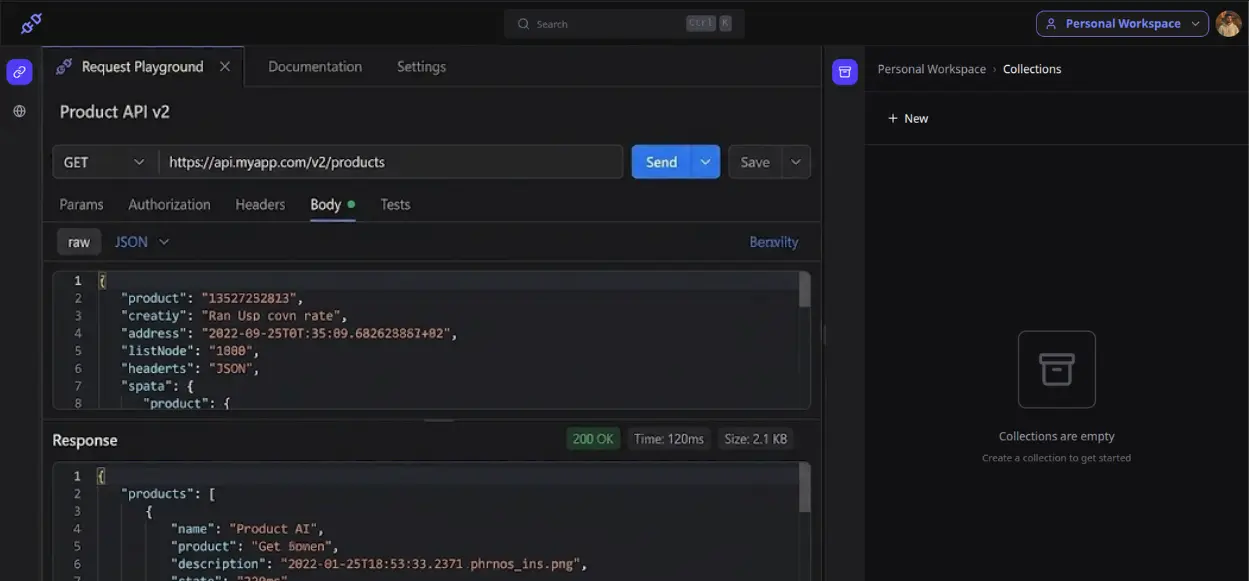
State Management in API Tools
Designing a solid foundation for workspaces, collections, and authenticated sessions before building request execution logic.
A reliable API client requires more than just making HTTP requests; it needs a structured way to organize endpoints, manage environments, and persist state securely across user sessions.
Before implementing the actual HTTP execution engine, Hermes needed a solid foundation: secure authentication, a relational schema for workspaces and collections, and a responsive frontend to manage this hierarchical data.
Lose request history and configurations when the tab closes. Require manual export/import of environments.
Securely store collections and environments in a relational database, tied to authenticated user accounts.
Better Auth & Prisma Persistence
Implementing a modern web stack for secure, typed data management.
Hermes v0.2.0 establishes the core infrastructure. Authentication is handled by Better Auth, providing seamless GitHub and Google OAuth integration alongside robust session management.
Data persistence is driven by PostgreSQL and Prisma ORM, providing a type-safe schema for Users, Sessions, Workspaces, and Collections. This ensures that the application state is structurally sound before adding complex request logic.
model User {
  id            String    @id
  email         String    @unique
  name          String?
  workspaces    Workspace[]
  sessions      Session[]
}

model Workspace {
  id          String       @id @default(cuid())
  name        String
  userId      String
  user        User         @relation(fields: [userId], references: [id])
  collections Collection[]
}

model Collection {
  id          String    @id @default(cuid())
  name        String
  workspaceId String
  workspace   Workspace @relation(fields: [workspaceId], references: [id])
}Foundation Architecture
The core technical pillars implemented in v0.2.0.
OAuth Authentication
Secure login via GitHub and Google providers using Better Auth.
Relational Schema
Type-safe database operations mapping users to their respective workspaces.
Persistent Storage
Robust relational data storage for collections and configurations.
Local Environment
Reproducible development environment orchestrating the database.
Architectural Choices
Laying the groundwork for a scalable developer tool.
Better Auth over NextAuth
Prisma for Type Safety
Project Status
Current state and future roadmap for Hermes.
Foundation Complete
v0.2.0 successfully implements the core authentication and workspace management layer.
Next: Request Execution
The upcoming phases will focus on implementing the actual HTTP request builder, execution engine, and response viewer.